 atlas87747
Before you wager a single real-money bet on the line, understand the odds. They are the single biggest factor. Odds reveal two things: the chance that a particular result lands, and the house’s built‑in mathematical advantage. In the UK, online gambling is a popular leisure activity. Differentiating games with genuinely player‑friendly return‑to-player percentages from those with punishing house edges turns a blind‑luck session into a straightforward entertainment choice. play slots duelcasino offers a wide library of slots, live dealer tables and instant‑win games, each with its own probability model. Know how those models work, what variance and RTP actually signify in practice, and where to find transparent game data, and you possess the toolkit to tailor your personal risk tolerance with the right casino product.
How Bonuses Interplay with the Math
Casino bonuses transform the real odds landscape by adding wagering requirements, game contribution weightings and maximum bet restrictions. A one hundred percent deposit match bonus granted as a fifty‑pound sum with a thirty‑five times wagering requirement implies you must wager one thousand seven hundred and fifty pounds in total bets before you can withdraw. If only slots with a 96 percent RTP are used to clear the bonus, the expected loss from wagering is around seventy pounds. That goes beyond the bonus value itself and generates a negative expected value scenario. The bonus does not serve as free money. It prolongs playtime at a calculable cost. Only when the allowed games carry an RTP high enough to push the expected loss below the bonus amount does the offer tilt in your favour.
Game weighting is the fine‑print variable that silently undermines bonus clearing efficiency. A platform may give one hundred percent contribution to slots while reducing table games and live casino play to ten or even five percent. At Duel Casino, the promotional terms for any given offer lay out these weightings clearly. The analytical player reviews them before selecting which games to play with active bonus funds. Trying to clear a wagering requirement on blackjack at ten percent contribution essentially multiplies the required bet volume tenfold. That transforms into an impossible ask within standard time limits. Adhering to one hundred percent contributing slots during the wagering phase maintains the mathematical path to conversion as straightforward as possible. The RTP selection strategy from earlier then decides how much of the bonus lasts the journey.
Discovering Transparent Information at Duel Casino
Navigating a well‑organised platform like Duel Casino commences with finding the information hubs that responsible operators provide. Game thumbnails and launch screens often feature an “i” or info icon. Click it to see RTP, volatility descriptors, paylines and feature rules. The live casino lobby displays the specific rule set for each blackjack and roulette table, including whether the dealer stands on soft seventeen and if surrender is offered. Both factors reduce the house edge in the player’s favour. Devoting sixty seconds to confirm these details before you commit funds is the single highest‑return investment of time an analytical gambler can make. It produces no excitement but silently extends bankroll effectiveness across an entire playing career.
Payment processing times and withdrawal limits also influence the odds calculation, indirectly. A fast withdrawal window, common at UK‑optimised casinos providing PayPal, bank transfer and debit card options, guarantees winning sessions turn into spendable cash without friction delays. Those delays tempt players to reverse withdrawals and keep playing. Each reversed withdrawal is effectively a new session with the house edge fully reinstated. Platforms that offer responsible gambling tools, including deposit limits, reality checks and session timers, deliver the scaffolding that a mathematically informed strategy needs. Duel Casino’s licensing under a reputable regulatory framework ensures these tools are not optional extras. They are integrated features reachable directly from the account dashboard, aiding the player who treats gambling as a costed leisure activity, not an income pursuit.
FAQ

What does RTP signify in real terms while playing at Duel Casino?
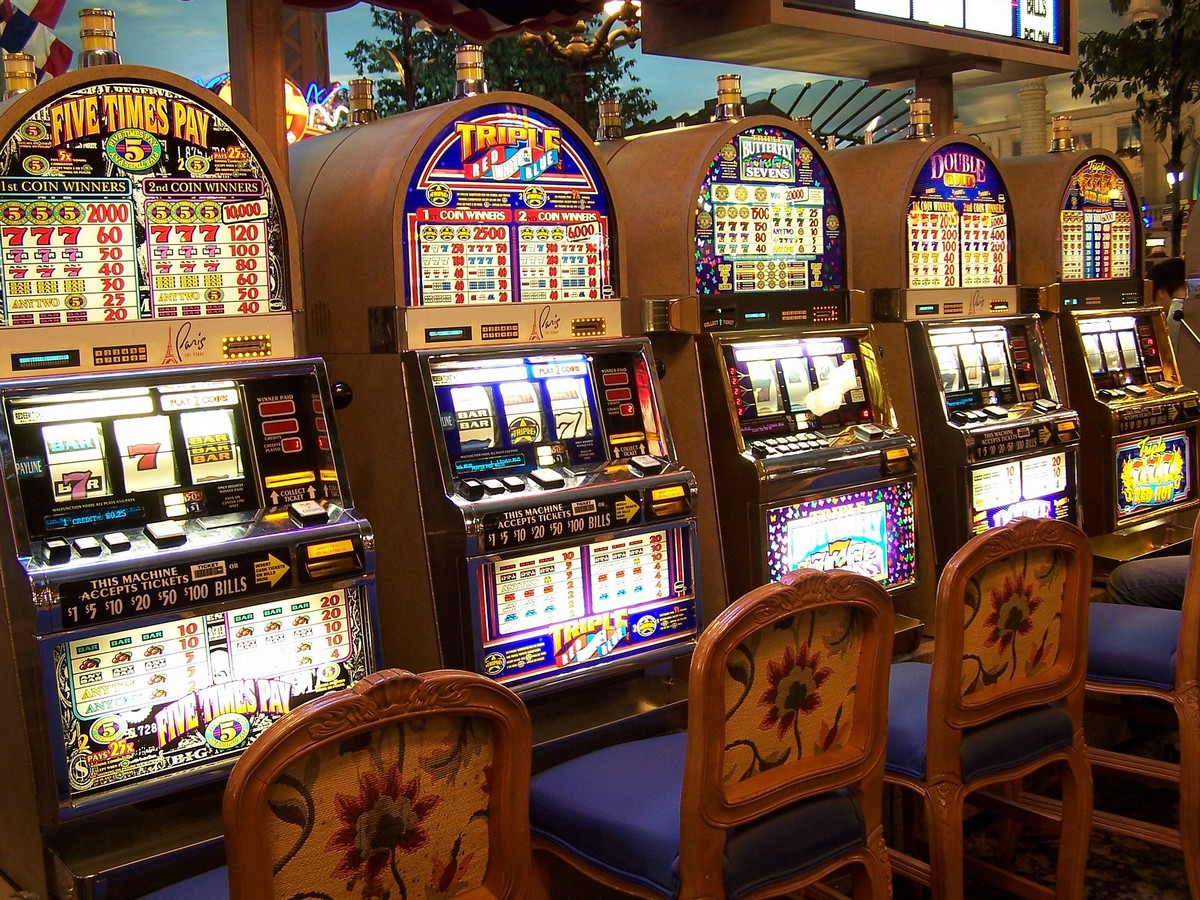
RTP, otherwise called Return to Player, represents the theoretical percentage of every wagers the game repays across millions of rounds. A 96 percent RTP slot theoretically gives back ninety‑six pounds for every hundred wagered over the long long term. Short‑term results vary wildly. A single session could conclude far above and far below the advertised percentage. This number is independently verified and serves as a reference for comparing the comparative generosity of different games prior to playing.
Does a slot with a reduced house edge constantly the better choice?
Not always, as entertainment value, volatility preference and bonus mechanics play a role. European roulette has a 2.7 percent house edge, being competitive, however its pace without of bonus features may bore a slot fan. A slot with a 95 percent RTP and an exciting bonus round might deliver greater personal enjoyment. The mathematically optimal choice equilibrates edge versus personal entertainment priorities. Not a single number represents the entire value of a casino experience.
How does volatility influence the odds of winning in a slot game?
Volatility does not modify the long‑term RTP. It dictates the spread of wins. Low‑volatility slots create many small payouts and keep a bankroll alive longer during standard sessions. High‑volatility slots offer long dry spells broken by big wins that can suddenly produce a net profit. No structure alters the underlying probability of winning in the long run. Choosing a volatility profile that aligns with your bankroll size and patience level is vital for an pleasant session.
Is it possible to counting cards or similar strategies function at online live blackjack tables?
Effective card counting demands deep deck penetration, indicating a high proportion of the shoe is dealt before a reshuffle. Online live casinos usually reshuffle after dealing roughly fifty percent of the shoe, and some use continuous shuffling machines. That makes counting unviable. Basic strategy, however, continues to be fully applicable and immediately reduces the house edge to its minimum achievable level. Committing to memory a basic strategy chart for the exact table rules offers a genuine mathematical benefit without attempting counting.
What exactly should I examine in a casino bonus’s terms before taking it?
The critical variables are the wagering requirement multiplier, the list of eligible games and their contribution weightings, the time limit for completing the wagering and any maximum bet restriction during bonus play. A thirty‑five times wagering requirement on slots is standard, but table game contributions often drop to ten percent, making bonus clearing impractically slow. Maximum bet caps, commonly five pounds per spin during a bonus, prevent aggressive wagering strategies that try to clear the requirement rapidly.
How exactly can I find the RTP of a game at Duel Casino?
RTP information is normally inside the game’s paytable or information menu. Click the “i” icon, a question mark or a menu button on the game screen. Some providers show RTP on the splash screen before the game loads. If the RTP is not immediately visible, the game’s rules or help section will contain it. All reputable UK‑facing platforms host games from regulated studios that make this data available, often alongside the volatility rating.
The shift from casual punter to informed player depends on a willingness to interact with the numbers that silently govern every spin, deal and wheel turn. Casino game odds are not an arcane industry secret. They are a clear set of percentages and probabilities that anyone can review and interpret. By concentrating on RTP, volatility, house edge variations between game types and the bonus terms that momentarily reshape the maths, a player transforms gambling from a passive lottery into an active entertainment choice with clearly defined cost expectations. Duel Casino supplies the tools, the game variety and the licensing framework that backs this analytical approach. The final step, though, is always personal: open the game information panel, read the data and let the percentages steer the click.
Practical Bankroll Management Driven by the Odds
Bankroll management in the absence of an understanding of odds is merely guesswork presented as discipline. A proper plan connects the total session bankroll, the average bet size and the expected hourly loss based on the house edge. A player with a two‑hundred‑pound evening budget who chooses a roulette wheel with a 2.7 percent house edge and bets two pounds per spin encounters roughly one hundred and twenty spins per hour at a live table. The expected loss from that hour is about six pounds fifty. That means the bankroll should in theory sustain around thirty hours of entertainment, far beyond a single session. This calculation provides a reassuring framework. It prevents you from emotionally hiking your bets during a cold streak.
Slot bankroll calculations need an extra volatility buffer. A player staking one pound per spin on a high‑volatility slot with a 96 percent RTP might reasonably expect a worst‑case downswing of two hundred betting units over a relatively short session, even though the long‑term expectation is just a four‑unit loss per hundred spins. Setting a loss limit equal to one hundred and fifty or two hundred times the bet size, rather than the mathematically expected loss alone, accounts for the variance that shapes the slot experience. Walk‑away discipline reinforces the theoretical advantage analytical players enjoy. Leave when the predetermined loss limit is hit, and you halt the house edge from grinding the bankroll to zero. Bank a significant win and resist the urge to rebet, and you preserve upside that variance has delivered ahead of its statistical schedule.
Live Casino Probabilities and the Personal Touch
Live casino games broadcast from professional studios deliver an authentic floor experience to the screen, but the underlying mathematics keep identical to software‑driven equivalents. A live European roulette wheel rotated by a human croupier still maintains a 2.7 percent house edge. The key difference is the speed of play and the information available. Live blackjack tables deal fewer hands per hour than a digital game because of physical card handling, betting time windows and player interaction. That slower pace lowers the hourly expected loss for the same average bet size. If you stake ten pounds a hand, a slower table naturally restricts your mathematical exposure inside a fixed time budget.
Game show‑style live offerings, such as Dream Catcher or Crazy Time, have boomed in popularity across UK platforms including Duel Casino. These titles mix the line between table game and slot, often combining a large money wheel with random multiplier segments. The RTP on these games is usually determined based on the total return including bonus rounds, but individual bet spots within the game can hold very different returns. A straight number bet on Crazy Time might provide a 96 percent RTP, while the bonus game segments can drop noticeably lower. Reading the game’s help section to find the exact RTP for each betting position is the mark of an informed live casino player. It supplants a https://www.coingecko.com/de/munze/jackpot/eur blanket assumption that all spots carry equal value.
Contrasting House Edge Throughout Major Game Categories
Slot Games and The Built-in Variability
Online slots constitute the broadest category at Duel Casino. They cover classic three‑reel machines, modern five‑reel video slots and progressive jackpot networks where prize pools rise into the millions. On non‑progressive slots, the house edge is built into the paytable and line configurations. It is more subtle than on a table game but no less real. A slot that pays back 96 percent holds an expected 4 percent for the house. The distribution of that payback is concentrated toward the top of the prize table. A large chunk of the RTP lies in rare bonus rounds or high‑multiplier symbol combinations. The base game often yields a much lower percentage. Players who never hit the feature rounds effectively experience a far worse temporary return than the advertised figure.
Progressive slot games add another layer. A portion of every wager, typically between 1 and 5 percent, gets channeled into the growing jackpot pool. If you are not keen in the top prize, or probabilistically unlikely to hit it, the effective base game RTP is reduced by exactly that allocation amount. A progressive slot showing a 94 percent total RTP might allocate 4 percent to the jackpot, leaving only 90 percent for the base game and minor prizes. This is why progressives can https://en.as.com/latest_news/what-are-the-winning-numbers-for-tuesdays-322-million-mega-millions-jackpot-n/ feel brutally volatile. You are basically paying for an extra lottery ticket attached to every spin. Players chasing life‑changing sums accept this mathematical haircut. Players who value playtime usually stick to non‑progressive titles with stable, higher base returns.
Table Game Options and the Strategy Factor
Live table games live in a distinct mathematical realm because your moves directly influence the effective house edge. Blackjack, when executed to a strict basic strategy chart present for every common rule set, can squeeze the house edge below 1 percent. Depending on the exact table rules, it can fall as low as 0.5 percent. That edge relies on optimal play on every single hand. Mistakes widen the advantage dramatically in the casino’s favour. The difference between standing correctly on a hard sixteen against a dealer’s ten and making an emotional hit transitions the game from near‑breakeven to one where the house recovers back several extra percentage points over the long run.
Roulette demonstrates how tiny rule tweaks create outsized mathematical consequences. European roulette, with a single zero, maintains a 2.7 percent house edge on all bets except those involving the zero itself. American roulette incorporates a double zero pocket and nearly doubles the house edge to 5.26 percent. That single pocket turns a reasonably competitive game into one of the worst propositions on the casino floor. Duel Casino’s live dealer lobby prominently highlights European single‑zero wheels. Any analytical player should avoid double‑zero variants unless a specific promotion offsets the higher mathematical toll. Baccarat sits in a comfortable middle ground. The banker bet, after commission, carries roughly a 1.06 percent house edge, making it optimal if less interactive.
Studying Paytables and Game Rules for Concealed Clues
The paytable is the slot player’s instruction manual. Skipping it before you spin is like signing a contract without checking the terms. Beyond detailing symbol values, modern paytables include critical information about RTP ranges, hit frequencies, maximum win caps and the mathematical trigger conditions for bonus rounds. A slot with a listed RTP range of 94 to 96 percent means the operator can choose from different payout settings. UK regulations enable this as long as the chosen setting is plainly displayed. Duel Casino, operating under a reputable licence, lets you see the chosen RTP level inside the game’s extended information panel. Checking that the number sits at the higher end of the range is a sensible pre‑spin habit.
Maximum win caps are another vital datapoint buried in the fine print. A slot might promise a top payout of ten thousand times the bet, but a closer read may show a hard cap of two hundred and fifty thousand pounds or its currency equivalent. In high‑stakes play, that cap can limit the theoretical value of the bonus round, especially on games from providers noted for setting relatively low aggregate limits. For casual players staking less than a pound per spin, the cap is practically irrelevant. For those betting five or ten pounds a round, hitting the payout ceiling during a monster bonus feature means losing any extra value above the limit. That is a frustrating but contractually permitted outcome, and the fine print details it unambiguously.
The manner Return to Player Percentages Actually Work
Return to Player, abbreviated to RTP across the board, is a theoretical figure. It indicates the percentage of total wagers a game is designed to pay back over millions of rounds. It is never a assurance that you will yourself get that percentage back tonight. A slot showing 96.5 percent RTP does not mean a hundred‑pound deposit will return to you ninety‑six pounds fifty. It indicates that across the whole network of players and an enormous number of spins, the machine’s algorithm targets that aggregate payout. In the short term, results can swing wildly. A single player can walk away with nothing or with multiples of the buy‑in. That variation is exactly what makes gambling commercially viable.
Independent testing labs validate RTP figures by simulating millions of rounds to verify the maths matches the declared percentage. Reputable UK‑facing platforms feature games from providers who send their RNG systems and paytables to auditors like eCOGRA, GLI or iTech Labs. Duel Casino pulls titles from these regulated studios, so the published RTP numbers are certified benchmarks, not marketing fluff. You can typically find a game’s RTP inside its information or help menu. This transparency is now a standard expectation rather than a luxury. Cross‑checking the stated RTP against independent slot review databases provides an extra layer of personal due diligence.
The RTP range across modern online slots is tight at the top end. Most video slots group between 95 percent and 97 percent. A gap of two percentage points appears tiny, but its effect on session endurance is far from tiny. If you bet one pound a spin at a steady pace you achieve roughly six hundred spins an hour. On a 95 percent RTP slot the theoretical loss over that hour is thirty pounds. On a 97 percent title it falls to eighteen pounds. That twelve‑pound difference, repeated across many sessions, either supports extra entertainment or leaks away unnoticed. Plenty of UK players screen new releases by RTP, automatically excluding anything below 96 percent unless exceptional bonus mechanics warrant the trade‑off.
The Reason Game Odds Serve as the Cornerstone of Each Wager
Any casino game, no matter how flashy the graphics or how many bonus features, relies on a mathematical engine that establishes the long‑term expectation. That engine is typically expressed as the house edge, a percentage that indicates you the average gross profit the casino holds from each bet. A game with a 2.5 percent house edge gives a theoretical return of 97.5 percent of all stakes over a huge number of rounds. These numbers are not a short‑term forecast for your evening. They are a statistical certainty over millions of spins or hands. The way the edge is built differs sharply between game categories. It sits in the paytable of a slot, the wheel layout of roulette, or the dealing rules of blackjack.
If you are accustomed to comparing interest rates on financial products, consider the house edge as a built‑in fee. A slot with a 96 percent RTP costs roughly four pounds per hundred wagered in expected loss. A roulette variant with a 2.7 percent house edge costs two pounds seventy over the same turnover. These differences add up. Spin one hundred rounds at a pound each on a 94 percent RTP slot and the expected shortfall is six pounds. Play a perfect basic‑strategy blackjack hand and the expected loss can be as low as fifty pence per hundred pounds wagered. Getting a feel for this spectrum enables you to put your bankroll where it lasts longer.
Volatility, or variance, rests on top of the house edge and controls how bumpy the ride to that long‑term expectation feels. A low‑variance game rewards frequent but modest wins, stretching a modest deposit across many rounds. High‑variance titles, common in many modern jackpot slots, can eat up your balance fast before a big multiplier spikes. Neither category is better or worse. The choice hinges on whether you want steady entertainment over hours or you are ready to grit through lean spells for a shot at a life‑changing payout. Duel Casino’s library contains both profiles. Knowing the difference before you click “play” transforms game selection from guesswork into a deliberate strategy.
Why Volatility Counts as Much as the Edge
Volatility, also called variance or payout frequency, defines the nature of the risk curve you experience on a specific game. Two slots can equally have a 96 percent RTP and deliver radically different sessions. The low‑volatility title will strike frequently, with many small wins that give back the stake or present modest multipliers. It recycles the bankroll and gives steady positive feedback. The high‑volatility counterpart will grind through long, punishing dry spells where the balance keeps shrinking, then surge suddenly with a bonus round or high‑value combination that can eliminate all prior losses and propel the session into profit. Neither design is better, but misunderstanding your own tolerance for those dry spells causes frustration and faster bankroll depletion.
Game studios commonly display a volatility rating inside the game information screen. It is generally a scale from low to high or a numerical score out of ten. Independent slot communities and casino reviewers additionally record observed volatility based on extensive play data. A slot rated nine out of ten for volatility requires a much bigger bankroll to endure the downswings than a title rated three out of ten. A rough rule of thumb: a high‑volatility session demands at least two hundred times the average bet size to survive the variance comfortably. A low‑volatility game can work with eighty to one hundred times the bet amount. At Duel Casino, you can utilize provider‑level filtering to gravitate toward Pragmatic Play or Play’n GO titles that explicitly label their variance profile.
The interplay between volatility and bonus wagering requirements is a tactical detail many players ignore. Casino welcome offers usually ask you to wager the bonus funds a set number of times before you can cash out winnings. Using a high‑volatility slot to satisfy a bonus with a thirty‑five times wagering requirement increases the risk of busting out before the playthrough is complete. A low‑volatility game, while less exciting, levels out the variance and raises the chance of turning bonus funds into withdrawable cash. Sensible bonus management at any UK‑facing casino entails checking the game weighting contributions and deliberately choosing lower‑variance eligible titles to protect the bankroll through the wagering journey.